
From the Field
Landscaping tips, planting guides, and seasonal advice from our team.
Best Trees and Shrubs to Plant in Western Massachusetts This Spring
Spring in Western Massachusetts is short and unpredictable — but it's one of the best planting windows you'll get all year. The ground has thawed, root systems are waking up, and there's enough rain ahead to give new plantings a real head start before summer heat arrives.
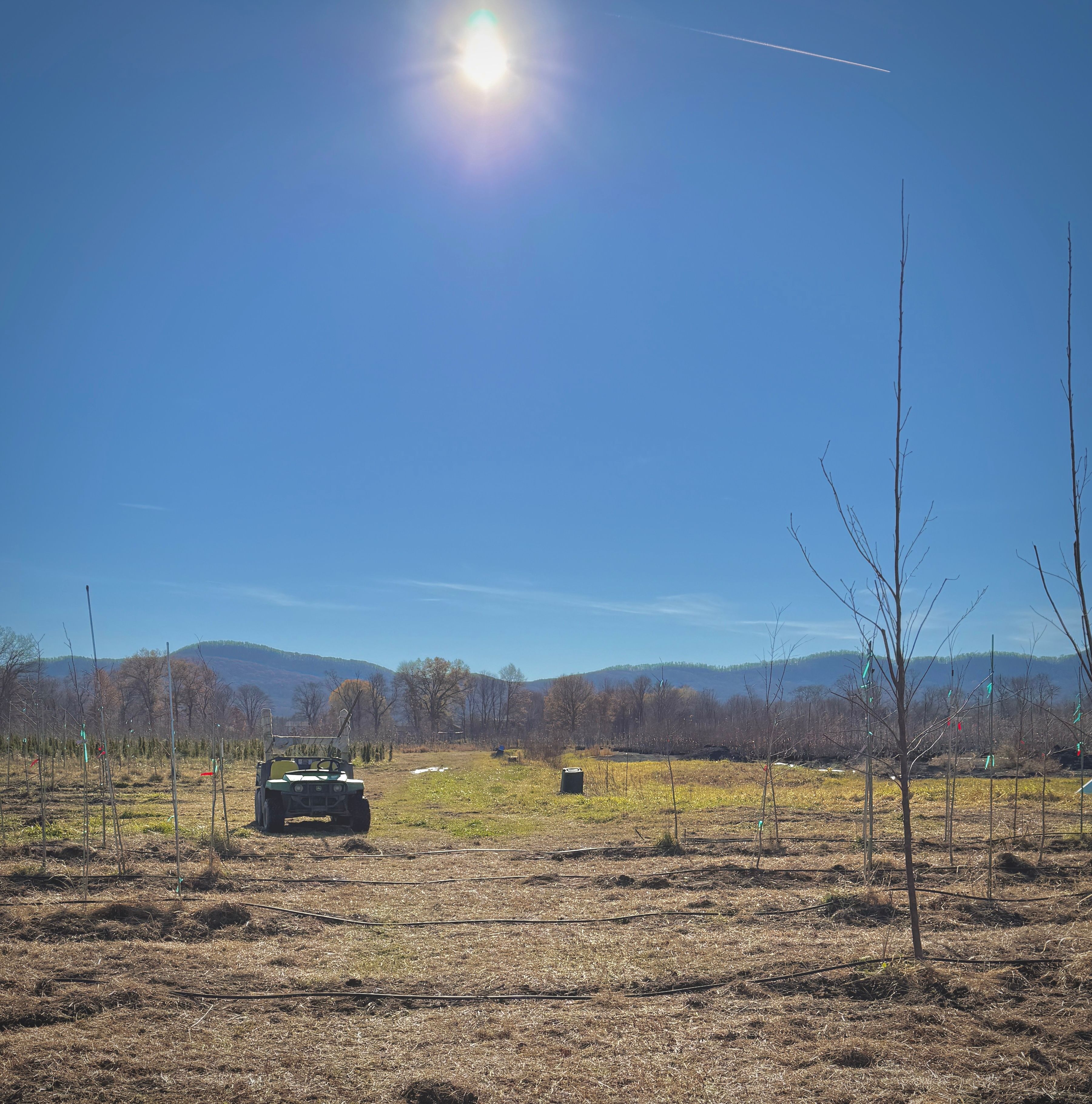
We've been growing nursery stock in Hadley for over 25 years, and the species below aren't pulled from a textbook. These are the trees and shrubs we grow on our own 50+ acres, acclimated to Pioneer Valley winters, Connecticut River Valley soil, and everything in between. If it's on this list, we've watched it succeed here — season after season.
Shade Trees That Earn Their Spot
Sugar Maple (Acer saccharum)
Best for: Front yards, large properties, and anyone who wants a tree that defines their landscape for decades.
The sugar maple is the signature tree of New England for good reason. It grows well in our well-drained valley soils, handles cold down to Zone 4, and delivers the kind of fall color that stops traffic. Expect 40 to 60 feet at maturity with a broad, rounded canopy that provides serious shade.
London Planetree (Platanus × acerifolia)
Best for: Street trees, commercial properties, and sites where other species struggle.
Tough, fast-growing, and remarkably tolerant of urban conditions — London planetrees handle compacted soil, pollution, and road salt better than almost anything else in the nursery. The peeling bark adds year-round visual interest. These are a favorite for municipal plantings, and we've installed them in streetscape projects across the state.
River Birch (Betula nigra)
Best for: Wet areas, naturalized landscapes, and properties near water.
If you have a wet or low-lying area, river birch is your answer. It actually prefers moist soil, which makes it one of the few shade trees that thrives near streams, rain gardens, or poorly drained corners of a property. The exfoliating bark — salmon, cream, and cinnamon — looks striking in every season.
Ornamental Trees That Pull Their Weight
Flowering Dogwood and Kousa Dogwood (Cornus florida and Cornus kousa)
Best for: Foundation plantings, understory layers, and smaller properties where a full-size shade tree would overwhelm.
Dogwoods are the workhorses of a well-designed landscape. Our native flowering dogwood blooms in early spring before the leaves unfurl — white or pink flowers against bare branches. Kousa dogwood blooms later, into June, with pointed white bracts and better disease resistance.
We carry both, and honestly, planting one of each gives you six weeks of continuous bloom. At 20 to 30 feet, they fit under powerlines and won't crowd a house.
Crabapple (Malus varieties)
Best for: Pollinator gardens, front yard focal points, and anyone who wants spring color without the maintenance headaches.
Modern crabapple cultivars are a different animal than the messy, disease-prone trees your grandparents had. Today's varieties are bred for persistent fruit (great for birds), spring bloom, and strong disease resistance. They stay compact — typically 15 to 25 feet — and don't drop the kind of fruit that turns your driveway into a slippery mess.
Kentucky Coffeetree (Gymnocladus dioicus)
Best for: Low-maintenance landscapes, commercial properties, and homeowners looking for something different from the usual maple-and-oak rotation.
This one flies under the radar, and we think more people should know about it. Kentucky coffeetree is drought-tolerant once established, has no serious pest or disease issues, and its open canopy lets enough filtered light through for turf grass below. The bold compound leaves give it a tropical feel that's distinctive without being out of place.
Evergreens for Structure and Privacy
Arborvitae (Thuja occidentalis)
Best for: Privacy hedges, windbreaks, property borders, and foundation plantings.
Arborvitae is the most popular privacy screen in New England, and it earns that spot. It's dense, stays green year-round, and grows in a naturally columnar shape that requires almost no pruning. We grow multiple varieties — from compact 'Emerald Green' for tight spaces to full-sized 'Green Giant' for fast screening.
One thing to know: deer browse arborvitae. If you're in a high-deer-pressure area, talk to us about placement strategies or consider mixing in some deer-resistant species.
Native Shrubs Worth Planting
Red Twig Dogwood (Cornus sericea)
This shrub earns its keep in winter when most of the landscape is brown and gray. The stems turn a vivid red that stands out against snow — genuine four-season interest from a native plant that requires almost no care. It grows 6 to 9 feet and works well massed along borders or near water.
Winterberry (Ilex verticillata)
Best for: Rain gardens, naturalized areas, and adding winter color to foundation beds.
Another native that shines in winter. Winterberry drops its leaves in fall, revealing dense clusters of bright red berries that last well into January. You'll need both a male and female plant for fruit production — we can help you get the pairing right.
Final Thoughts & Things to Get Right
Plant early. The best window in Western MA is mid-April through late May. This gives roots time to establish before summer stress.
Water deeply, not often. New trees need about an inch of water per week for their first two growing seasons. One deep soak beats daily sprinkles.
Mulch properly. Two to three inches of bark mulch in a ring around the base — but never piled against the trunk. Volcano mulching is harmful to trees and should really be avoided.
Buy local stock. Trees and shrubs grown in our climate are already adapted to our freeze-thaw cycles, our soil pH, and our pest pressures.
Ready to Plant?
Our Spring inventory moves tends to move quickly. If you're planning a project, the best time to reach out is before the season gets ahead of you.
Whether you're a homeowner planning a privacy screen or a landscaper stocking up for the season, we can help you find exactly what you need.
Request a Quote or call us at (413) 549-8873.